Cost guide
Foundation Crack Repair Cost (2026): Per Crack, Per Foot and DIY
Most single cracks are a few hundred dollars to inject. The price jumps when the crack is a symptom of a moving wall or settling footing, so price the cause, not just the crack.
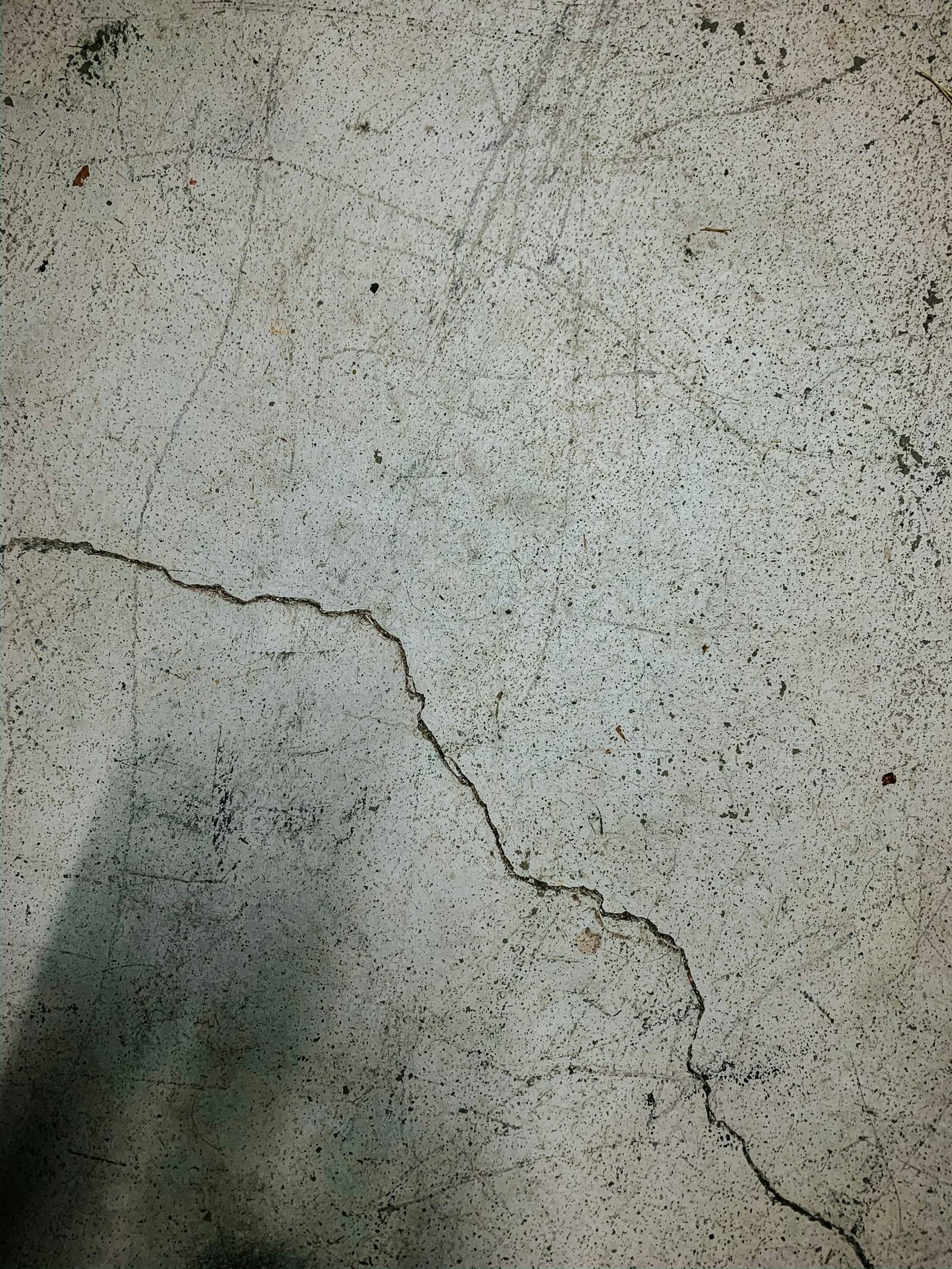
Professional sealing or injection of a non-structural foundation crack usually costs $250 to $800, according to HomeAdvisor and Bob Vila. Contractors that publish a minimum or single-crack price charge $550 to $800 for one crack. A 10-foot DIY urethane kit was $157.99 on Walmart.com on October 18, 2026. Horizontal, widening or offset cracks are structural repairs that cost thousands.
This page covers prices. Working out what kind of crack you have is in our guide to foundation cracks, and choosing the repair is in our foundation crack repair methods guide.
How we built these ranges
Every price on this page comes from a public price page or retail listing, linked where it’s used and listed in Sources with its date: the publisher’s own published or updated date where it gives one (undated prices are labelled as such), or, for retail listings, the date we checked the price (October 18, 2026). We show each publisher’s range as published, side by side; we don’t average ranges or blend sources into a single figure. We haven’t surveyed contractors or collected quotes of our own yet, so there is no original survey data here. The worked examples are hypothetical arithmetic on the published figures, with the sums shown.
How much does foundation crack repair cost?
Published prices for crack repair cluster around $250 to $800, while contractors that publish per-foot or per-project prices show how minimum charges and multi-crack jobs push the bill higher. The units differ, so compare like with like.
| Source | Typical cost | Range on a shared scale |
|---|---|---|
| HomeAdvisorNotes: National, crack repair ("sealing cracks"); June 2026 | $250–$800 | |
| This Old HouseNotes: National, crack filling with epoxy, polyurethane or hydraulic cement; Oct 2026 | $250–$800 | |
| Bob VilaNotes: National, per crack; May 2024 | $250–$800 | |
| Ram JackNotes: Contractor network, crack repair job; Aug 2026 | $300–$800 | |
| Angi (Austin, TX)Notes: Local guide, foundation cracks; Oct 2025 | $300–$900 | |
| US WaterproofingNotes: One non-structural crack, polyurethane, Chicago area; Jan 2026 | $550–$600 | |
| Perma-PierNotes: Contractor; "depending on width and activity," top end open-ended; Apr 2026 | $500–$2,500 |
Sources: HomeAdvisor, This Old House, Bob Vila, Ram Jack, Angi Austin, US Waterproofing, Perma-Pier. For a local data point, This Old House lists an average crack repair cost of $363 in Houston (This Old House, Feb 2024).
| Pricing unit | Published price | What it covers | Source |
|---|---|---|---|
| Per linear foot | About $58 per foot, $800 minimum | Epoxy crack repair; prices undated | Acculevel (Indiana contractor) |
| Per project | $750–$4,500 | Basement wall crack injection | Olshan, June 2026 |
| Per project | $750–$3,500, $750 minimum | Cosmetic epoxy sealing of slab hairline cracks | Olshan, June 2026 |
| Full severity range | Under $50 to over $8,000 | From a hairline crack to a serious fix | Bob Vila, Sept 2025 |
| Neglected cracks | $10,000–$15,000 or more | When cracks lead to structural problems | This Old House, Oct 2026 |
How minimum charges set the price of a short crack
Contractors price the visit, not just the resin. Acculevel’s $58-per-foot rate means a 4-foot crack would be $232 in material and labor, but its $800 minimum applies instead. Olshan’s slab-sealing minimum is $750. In the other direction, US Waterproofing says its single-crack price is “typically discounted when more than one crack is fixed.” If you have several cracks, get them priced in one visit.
What will my type of crack cost to fix?
The crack’s pattern tells you which budget you’re in: a sealing job in the hundreds, or a stabilization job in the thousands. The table maps common patterns to the repair they usually lead to and the published price for that repair. It is a budgeting aid, not a diagnosis; the pattern itself is explained in our foundation cracks guide, and only an on-site assessment tells you what your crack means.
| What you see | Usual repair | Published price | Concern level |
|---|---|---|---|
| Thin, stable shrinkage crack in poured concrete, dry | Monitor, or seal against moisture | Often DIY: about $100–$400 for an epoxy kit for cracks under 1/4 in (NerdWallet) | Monitor |
| Vertical crack in a poured wall, dry, not moving | Epoxy injection | $250–$800 (HomeAdvisor) | Monitor |
| Vertical crack that leaks | Polyurethane injection; check drainage | About $550–$600 for one crack, Chicago area (US Waterproofing) | Get it inspected |
| Hairline cracks across a slab floor, no height difference | Cosmetic sealing | $750–$3,500 per project (Olshan) | Monitor |
| Stair-step crack in block or brick, with sticking doors or sloping floors | Settlement assessment; often piers | $1,000–$3,000 per pier (LendEDU) | Get it inspected |
| Horizontal crack, or a wall bowing inward | Wall anchors, straps or tiebacks | $1,600–$7,200 for a 20-ft wall, by system (Angi) | Get it inspected; Urgent if the wall is bulging or still moving |
| Slab crack with one side higher, or doors and floors out of level | Structural evaluation; slab piers or leveling | See our slab repair cost guide | Get it inspected |
Most homes in Texas and the South sit on slabs, so the cracks people see are in the slab or the brick veneer rather than a basement wall. Slab cracks with displacement are priced as slab repair: see our slab foundation repair cost guide and, for lifting a settled house, the house leveling cost guide.
Not sure whether your crack is the cheap kind or the structural kind? Check the other warning signs before you pay for injection.
Epoxy vs polyurethane: is one cheaper?
We could not find a US cost source that prices epoxy and polyurethane injection separately; the US guides above quote one range for both. The only competitor that splits them is Canadian: HomeStars lists epoxy at $500 to $1,200 and polyurethane at $500 to $1,500 per crack, in Canadian dollars (August 2026). Those ranges overlap almost completely, so pick the material by the crack, and expect the price to follow the access, length and minimum charge rather than the resin.
| Epoxy | Polyurethane | |
|---|---|---|
| Job it does | Rebonds the crack; ACI says it can "restore the structural integrity and the resistance to moisture penetration" (RAP-1) | Seals water out; adds "practically zero compressive strength" (Emecole's president, quoted by Concrete Network) |
| Strength | Compressive strength "at 12,000 psi or greater," above most concrete (Concrete Network) | Not a structural repair |
| Moving cracks | "If the crack is subject to subsequent movement, an epoxy repair may not be applicable" (RAP-1) | Tolerates slight movement (Concrete Network) |
| Actively leaking cracks | Cures over hours and can flow out the back of the wall (Concrete Network) | Usually best; foams within minutes (Concrete Network) |
| Corroding rebar | "Should not be repaired by epoxy injection" (RAP-1) | Doesn't address corrosion either; the cause needs fixing |
| Published price | US: not priced separately. Canada: CAD $500–$1,200 per crack (HomeStars) | US: not priced separately. Canada: CAD $500–$1,500 per crack (HomeStars) |
Two cautions on the sources: Concrete Network’s polyurethane comment comes from the president of Emecole, which makes polyurethane kits, and HomeStars’ figures are Canadian dollars, not a US price. The detail on how each material is injected is in the methods guide.
DIY crack repair kits: products and prices checked October 18, 2026
DIY crack repair products run from about $30 for an epoxy paste to about $160 for a 10-foot urethane injection kit and $268 for a 20-foot polyurethane kit, based on the retailer prices we checked on October 18, 2026. Retail prices change often, so treat these as a snapshot and check the listing before you buy.
| Product | Type | Price and where | Notes |
|---|---|---|---|
| RadonSeal Concrete Foundation Crack DIY Repair Kit, 10 ft | Low-viscosity, two-component urethane injection kit | $157.99, Walmart.com (sold by Spreetail), Oct 18, 2026 (listing) | RadonSeal rates its DIY kits for cracks 1/2 in wide or less (RadonSeal) |
| PC Products PC Concrete 9 oz. Epoxy | Two-part epoxy paste for filling cracks and anchoring | $32.49, The Home Depot, Oct 18, 2026 (listing) | Not an injection kit. It fills the surface; it doesn't inject resin through the wall |
| Emecole #20PCRK 20 ft. Foundation Crack Repair Kit | Polyurethane foam injection kit | $268.00, Big Rock Supply, Oct 18, 2026 (listing) | Larger kit for longer cracks |
| Sikadur Crack Repair Kit | Epoxy capseal and injection resin | No price shown (Sika USA) | Sika says it "may only be used by experienced professionals"; rated 10,000 psi compressive at 68°F |
| SikaFix Kit | Hydraulic mortar, injection ports and two-part hydrophobic polyurethane grout, for leaking cracks | Price not confirmed (Home Depot Canada) | Sold in Canada |
For context, NerdWallet puts a DIY epoxy injection kit at “about $100 to $400” for cracks under a quarter-inch (February 2026). Concrete Network says DIY kits come sized for 10, 30 or 60 feet of crack.
The length on the box is a best case. RadonSeal says a 10-foot epoxy kit “contains approximately 60 cubic inches of material, enough to fill a crack approximately 8 feet long, 1/16 inch wide, and 10 inches deep” (RadonSeal). A wider or deeper crack uses more, so a 10-foot kit may cover less than 10 feet.
What a kit can't fix
A kit is reasonable for a dormant crack within its rated width (1/2 inch for RadonSeal’s kits). Skip it if the crack is horizontal, the wall bows, one side of the crack has shifted, the crack keeps widening, there’s rust staining that could mean corroding steel (ACI’s RAP-1 says not to epoxy-inject those), or water is coming through under pressure. Those need the cause assessed first.
When does a crack become a structural repair bill?
When a crack comes from a wall being pushed in or a footing settling, the bill is for stabilizing the structure, and injection is a minor line item, if it’s included at all. These are the published prices for the systems a contractor is most likely to propose.
| Sign | Likely repair | Published price | Source |
|---|---|---|---|
| Horizontal crack, wall bowing inward | Wall anchors (about one every 5 ft) | $400–$700 each; $1,600–$2,800 for a 20-ft wall | Angi, Oct 2026 |
| Horizontal crack, limited bowing | Carbon fiber or steel straps | $350–$1,000 each ($85–$250 per ft); $1,700–$5,000 for a 20-ft wall | Angi, Oct 2026 |
| Horizontal crack, limited bowing | Carbon fiber straps | About $725–$800 each | Acculevel, Mar 2026 |
| Horizontal crack, wall bowing inward | Helical tiebacks | $1,500–$1,800 each; $6,000–$7,200 for a 20-ft wall | Angi, Oct 2026 |
| Wall that has moved and needs pushing back | Wall straightening plus straps | $6,700–$11,000 for a 20-ft wall | Angi, Oct 2026 |
| Bowing wall, any system | Overall bowing-wall repair | $4,000–$12,000 | HomeAdvisor, June 2026 |
| Stair-step crack with sticking doors or sloping floors | Piers under the settled section | $1,000–$3,000 per pier; an average home uses 8–10 | LendEDU, Apr 2026 |
Bob Vila adds that reinforcing a wall with a horizontal crack can run “upward of $4,000” (Bob Vila), and US Waterproofing says carbon fiber on a lightly damaged 30-foot wall can cost “as little as $8,000,” with steel channels about three times that for walls that have moved more than 2 inches.
Where the sources disagree
Which system fits depends on how far the wall has moved, and contractors don’t agree on the cutoff. Acculevel says carbon fiber straps work when bowing is “less than 3 inches,” yet the same article says walls bowed “more than 2 inches” may need other methods; US Waterproofing uses 2 inches. These are contractor rules, not engineering standards, so let a structural engineer specify the system. Per-pier pricing and pier counts are covered in the foundation repair cost guide and our planned cost per pier guide.
Worked example: pricing cracks in one basement
Here is how the same cracks price out under each published method. This is a hypothetical house, not a quote; your contractor’s rates will differ.
The house: a poured-concrete basement with three vertical cracks: 3 ft and 5 ft (both dry and not moving) and 7 ft (damp, leaks in heavy rain). That’s 15 linear feet in total.
- Per-foot pricing at Acculevel’s published ~$58 per foot: 15 × $58 = $870. That’s above the $800 minimum, so the minimum doesn’t apply.
- Per-crack pricing at the national $250–$800 range: 3 × $250 = $750 to 3 × $800 = $750–$2,400.
- Only the 3-ft crack at the per-foot rate: 3 × $58 = $174, but the $800 minimum applies, so $800. One short crack costs nearly as much as three.
- DIY: 15 ft of crack needs at least two 10-ft RadonSeal kits: 2 × $157.99 = $315.98, more if the cracks are wide or deep. The leaking crack is a better fit for urethane than epoxy.
Now add a problem. Suppose the same basement also has a horizontal crack along a 20-ft wall that is bowing inward. The budget becomes the injection quote plus stabilization plus an engineer’s report ($340–$780, HomeAdvisor). With wall anchors at Angi’s $1,600–$2,800 for a 20-ft wall: $870 + $1,600 + $340 = $2,810 low, and $870 + $2,800 + $780 = $4,450 high.
Hypothetical basement: three cracks, then a bowing wall
$870
Three cracks, 15 ft at $58/ft
Our calculation from Acculevel's published rate
$800
One 3-ft crack, minimum charge applied
Our calculation from Acculevel's $800 minimum
$315.98
Two 10-ft DIY urethane kits
Our calculation from Walmart.com price, Oct 18, 2026
$2,810–$4,450
Cracks + wall anchors on a 20-ft wall + engineer
Our calculation from Acculevel, Angi and HomeAdvisor figures
A second scenario: settlement at one corner. If a stair-step crack in a brick or block wall comes with sticking doors at that end of the house, and the contractor proposes 5 piers, the arithmetic at LendEDU’s $1,000–$3,000 per pier is 5 × $1,000 = $5,000 to 5 × $3,000 = $15,000, before the engineer. The pier count is the contractor’s or engineer’s call, not ours; LendEDU says an average home uses 8 to 10.
For a planning range on your own house, use the foundation repair cost calculator, then get written quotes.
What extras can show up on a crack repair quote?
The injection itself is often the smaller part of the bill once access, water and paperwork are added. Watch for these:
- Exterior excavation. A crack that leaks badly may be treated from outside, which means digging along the wall. We found no published per-linear-foot price for excavating and waterproofing one cracked wall. The nearest published figures are for whole-house exterior waterproofing: This Old House lists $7,000 to $15,000 for exterior waterproofing and $50 to $200 per cubic yard for excavation alone (This Old House, March 2026), and Olshan lists an exterior waterproofing membrane at $9,000 to $35,000 (Olshan, June 2026). Those are whole-house figures, not a price for one wall, so get exterior work on a single crack priced in writing.
- Leak repair bundled with sealing. Bob Vila and HomeAdvisor both list leak repair at $2,000 to $7,000 (Bob Vila; HomeAdvisor).
- Interior finish removal and repair. Paneling, drywall or flooring over the crack has to come off and go back. Ask whether that’s in the price.
- Structural engineer. HomeAdvisor lists $340 to $780 for a report; Angi lists $250 to $500 for an inspection of a bowing wall (Angi). In Texas, the Texas Section ASCE repair guidelines say the engineer “should personally visit the site.”
- Permit, inspection and landscaping. In Canada, HomeStars lists a permit at CAD $100 to $500, a post-repair inspection at CAD $150 to $300, and landscaping restoration at CAD $500 to $3,000 (HomeStars). We didn’t find US equivalents; check with your local building department.
- Warranty terms. A cheaper quote may carry a leak-only warranty, or one that doesn’t transfer to a buyer. What crack repair warranties usually cover and exclude is in the crack repair methods guide.
- Financing. A single injected crack is usually a few hundred dollars, so financing mostly comes up with stabilization work. Contractors that advertise payment plans don’t always publish the terms: Olshan advertises “Payment Plans as Low as $125/Month” without stating an APR or term (Olshan, June 2026), and LendEDU cautions that contractor financing “sometimes carries higher rates than bank products” (LendEDU, April 2026). Ask for the APR, term and total repayment in writing; our planned foundation repair financing guide will compare options.
How to read a crack repair quote
A useful crack repair quote states the measured length, the material, the method and what the warranty covers, so you can compare it line by line with another bid. Check each of these:
- Unit and quantity. Is it priced per crack, per linear foot or per visit? Does it list the linear feet of each crack, and is there a minimum charge?
- Material and product. Epoxy or polyurethane, and which product. Ask for the data sheet so you can check its rated crack width and moisture limits.
- Ports and side. How many injection ports, and is the work done from inside or outside?
- Multiple cracks. Is there a discount for doing several in one visit? US Waterproofing says it typically discounts additional cracks.
- Cause. Does the contractor say what caused the crack, and is anything being done about it? ACI RAP-1 says that when a structural repair is needed, the conditions that cause the crack “must be corrected prior to proceeding with the epoxy injection.”
- Warranty. Leak-only or structural? Does it transfer if you sell? Does it cover a crack that reopens?
- Upsell check. If a crack quote turns into anchors or piers, ask for the reasoning in writing and consider an independent engineer before you sign. Our planned guides on when to hire a structural engineer and contractor red flags go further.
If a crack is widening quickly, a wall is bulging or leaning, or doors suddenly won’t close, get a professional assessment promptly rather than waiting to collect bids.
Ready to compare crack repair quotes? Ask each contractor for the linear feet, the product and the warranty terms in writing.
Foundation crack repair cost questions
How much does it cost to fix a crack in a foundation?
Professional crack sealing or injection typically costs $250 to $800, per HomeAdvisor (June 2026), and Bob Vila lists the same range per crack. Ram Jack publishes $300 to $800. Minimum charges matter: Acculevel lists an $800 minimum, and US Waterproofing quotes about $550 to $600 for one crack near Chicago. Several cracks or a whole wall can run $750 to $4,500, according to Olshan (June 2026).
How much does foundation crack repair cost per foot?
Few contractors publish a per-foot price. Acculevel, an Indiana-based contractor, lists about $58 per linear foot for epoxy crack repair, with an $800 minimum charge. At that rate a 10-foot crack works out to about $580, so the minimum would apply. Short cracks are usually billed at the minimum, which is why a per-crack or per-visit price is more common.
Is epoxy or polyurethane injection cheaper?
No US cost source we found prices them separately. Canadian marketplace HomeStars lists epoxy at $500 to $1,200 and polyurethane at $500 to $1,500 per crack in Canadian dollars (August 2026), so the ranges overlap. Choose by the crack, not the price: ACI's RAP-1 bulletin says epoxy restores structural integrity but may not suit a crack that keeps moving, and that polyurethane may suit cracks that don't compromise structural integrity.
Can you fix a foundation crack yourself?
For a dormant crack up to about half an inch wide, a DIY injection kit is reasonable; RadonSeal rates its kits for cracks that size. Its 10-foot urethane kit listed at $157.99 on Walmart.com on October 18, 2026. Kits do not fix horizontal cracks, bowing walls, offset cracks or cracks that keep widening. Those point to soil or structural movement that needs a professional assessment.
How can you tell if a crack is structural?
Warning signs include horizontal cracks in basement walls, stair-step cracks in block or brick, cracks wider at one end, cracks where one side has shifted, cracks that keep growing, and cracks alongside sticking doors or sloping floors. Any of these justifies a structural engineer's visit, which HomeAdvisor puts at $340 to $780 for a report, before you pay for crack injection.
How much does horizontal foundation crack repair cost?
A horizontal crack usually means soil pressure is pushing the wall in, so you are paying for wall stabilization, not injection. Angi's October 2026 figures for a 20-foot wall are $1,600 to $2,800 with wall anchors, $1,700 to $5,000 with carbon fiber or steel straps, and $6,000 to $7,200 with helical tiebacks. Bob Vila puts horizontal-crack reinforcement at upward of $4,000.
Does homeowners insurance cover foundation crack repair?
Usually not. NerdWallet's insurance guide says homeowners insurance doesn't usually cover foundation cracks, and treats gradual settling as wear and tear. Damage generally has to be sudden and accidental, such as a pipe that suddenly bursts; a slow leak you didn't fix may not be covered. Standard policies also usually exclude floods and earthquakes. Read your policy's exclusions and call your insurer before work starts.
Do all foundation cracks need to be repaired?
No. Thin, stable shrinkage cracks are common in poured concrete and often need only monitoring or sealing against moisture. Mark and date the crack ends, or fit a crack gauge, and recheck over several months. Repair it when it leaks, widens, offsets or appears with other movement signs. ACI's RAP-1 bulletin says the cause of cracking should be corrected before a crack is injected.
Sources
- HomeAdvisor — How Much Does Foundation Repair Cost? (updated June 20, 2026)
- Bob Vila — How Much Does Foundation Repair Cost? (updated May 29, 2024)
- Bob Vila — Foundation Crack Repair Cost (updated September 22, 2025)
- This Old House — Foundation Repair Cost (updated October 8, 2026)
- This Old House — Foundation Repair in Houston (February 5, 2024)
- Ram Jack — Cost of Foundation Repair (August 27, 2026)
- Angi — How Much Does Foundation Repair Cost in Austin, TX? (October 10, 2025)
- Perma-Pier — Foundation Repair Cost (April 14, 2026)
- US Waterproofing — Foundation Repair Cost (updated January 29, 2026)
- Acculevel — Crack Repair with Epoxy (published July 23, 2020; prices undated)
- Olshan Foundation Repair — Foundation Repair Costs (modified June 3, 2026)
- HomeStars (Canada) — Foundation Crack Repair Price Guide (updated August 21, 2026)
- Angi — Cost to Support a Bowing Basement Wall (updated October 1, 2026)
- Acculevel — Carbon Fiber Straps (modified March 25, 2026)
- LendEDU — Foundation Repair Cost (April 1, 2026)
- ACI Committee E706 — RAP Bulletin 1: Structural Crack Repair by Epoxy Injection (reapproved 2009)
- Concrete Network — Concrete Crack Injection (undated)
- Walmart.com — RadonSeal Concrete Foundation Crack DIY Repair Kit, 10 ft (price checked October 18, 2026)
- RadonSeal — DIY Crack Injection Kits (updated August 24, 2026)
- The Home Depot — PC Products PC Concrete 9 oz. Epoxy (price checked October 18, 2026)
- Big Rock Supply — Emecole 20 ft. Foundation Crack Repair Kit, Polyurethane Foam (price checked October 18, 2026)
- Sika USA — Sikadur Crack Repair Kit (product page, checked October 18, 2026)
- The Home Depot Canada — SikaFix Kit (checked October 18, 2026)
- NerdWallet — Foundation Repair Cost (February 25, 2026)
- NerdWallet — Does Homeowners Insurance Cover Foundation Issues? (May 21, 2024)
- Texas Section ASCE — Guidelines for the Evaluation and Repair of Residential Foundations, Version 3 (adopted 2022)
- This Old House — Basement Waterproofing Cost (updated March 4, 2026)