Cost guide
How Much Do Helical Piers Cost?
A retrofit helical pier is priced as an installed system, not a length of steel. Here are the dated published prices, the arithmetic for a whole job, and what to check on the quote.
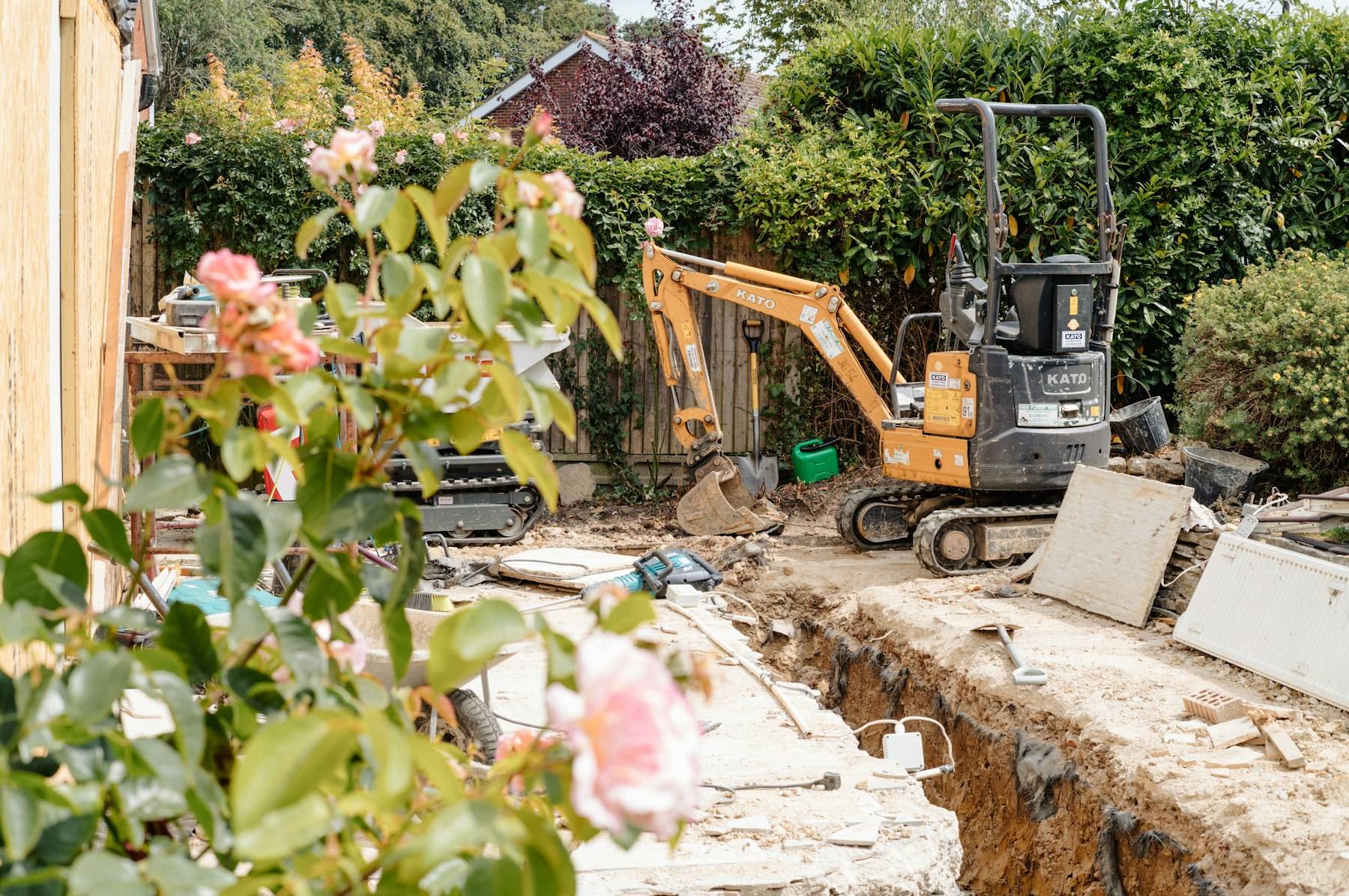
Helical piers for an existing house cost about $2,000 to $4,000 per pier installed (HomeGuide, Feb 2026; Ram Jack, page updated Aug 2026), and Olshan lists $3,500 to $4,400 per slab pier (June 2026). A typical 5–10 pier repair works out to $10,000–$40,000 at HomeGuide’s range, before engineering and permits.
Helical pier prices at a glance
$2,000–$4,000 per pier
Installed, existing house
$3,500–$4,400 per pier
Slab helical pier
$16,000–$32,000
8 piers, installed
$300–$500 per pier
New deck pier, installed
Helical pier prices by source (2026)
Published installed prices for retrofit helical piers cluster between $2,000 and $4,400 per pier, with a few regional contractors lower and deck piers far lower. The table lines up every current figure we could open, with the job type each one describes and its date.
| Source | Published price | Job type | Source date |
|---|---|---|---|
| Olshan Foundation Repair | $3,500–$4,400 per pier | Slab, helical pier (retrofit) | Modified June 3, 2026 |
| Ram Jack | $2,000–$4,000 per pier | Helical pier installation (retrofit) | Page updated Aug 2026 (no date in the text) |
| HomeGuide | $2,000–$4,000 per pier; most about $3,000 | Settling or sinking foundations, installed | Feb 6, 2026 |
| Angi | About $3,000 per pier | Foundation repair method average | Updated July 9, 2026 |
| NC Foundation Fixes | $1,500–$4,000 per pier | Residential repair, North Carolina | Aug 8, 2026 |
| Foundation Piers | $900–$2,500 per pier | Residential repair, Dallas–Fort Worth contractor | Modified Oct 3, 2026 |
| Today's Homeowner | $2,500–$3,500 per pier | Foundation piers | Updated Apr 9, 2025 |
| Pearce Marine | About $3,000 per pier | Residential, Long Island contractor | Nov 13, 2024 |
| 603 Basement Solutions | $2,700 each for the first three, then $2,200 each | New-construction foundation, New Hampshire | June 30, 2026 |
| HomeGuide | $300–$500 per pier | New deck piers, installed | Feb 6, 2026 |
How we built this table
The retrofit figures that compare like with like, on one scale:
| Source | Per pier | Range on a shared scale |
|---|---|---|
| Foundation Piers, DFWDate: Oct 2026 | $900–$2,500 | |
| NC Foundation FixesDate: Aug 2026 | $1,500–$4,000 | |
| HomeGuideDate: Feb 2026 | $2,000–$4,000 | |
| Ram JackDate: Updated Aug 2026 | $2,000–$4,000 | |
| Today's HomeownerDate: Apr 2025 | $2,500–$3,500 | |
| Olshan, slabDate: June 2026 | $3,500–$4,400 |
Regional spread exists, but the sources don’t let anyone measure it cleanly: the Dallas–Fort Worth contractor’s range sits lowest, Olshan’s slab row highest, and each publisher prices a different mix of jobs. Treat the table as a check on a quote, not as a local price. The same Olshan and Ram Jack figures feed the foundation repair cost hub and the slab foundation repair cost guide.
Why does one helical pier cost $300 and another $4,400?
The price gap comes from the job, not the steel: a deck pile is a short shaft screwed into open ground, while a retrofit pier has to be installed beside an existing footing, fixed to it with an underpinning bracket, verified by torque and often used to lift the house. Published prices only make sense once you know which of these three a number describes.
| Deck pile | New-construction pile | Retrofit underpinning pier | |
|---|---|---|---|
| What it supports | Deck posts and light framing | A foundation that hasn't been poured or built yet | An existing house that has settled |
| Digging | Open ground, no footing in the way | Open site | Hole dug beside the existing footing or wall, sometimes by hand or indoors |
| Top hardware | Post bracket or cap | New-construction pile cap, set at 0° ± 1° (ESR-2794) | Remedial repair bracket under the footing, set at 3° ± 1° (ESR-2794) |
| Lifting | None | None | Often: the bracket is jacked to raise or hold the structure |
| Paperwork | Varies by city | Engineered design; permit rules vary by city | Engineer's plan, permit, torque log; plumbing test if lifted |
| Published price | $300–$500 installed (HomeGuide) | $2,700, then $2,200 each (603 Basement Solutions, NH) | $2,000–$4,000 (HomeGuide; Ram Jack); $3,500–$4,400 slab (Olshan) |
The per-foot trap. Some of the most visible helical prices describe the shaft, not an installed pier. Manufacturer PierTech wrote in 2021 that piers cost “around $30 per linear foot” and that “a typical 20-foot pier runs about $600.” HomeGuide gives $15 to $30 per linear foot for the helical piers alone. Neither includes the lead section, bracket, digging, mobilization, labor or lift. HomeGuide’s own split shows the difference: materials at $1,500 to $2,000 per pier and labor at $500 to $2,000 or more per pier.
Older articles add to the confusion. In Family Handyman (Feb 2024), an Olshan representative put the average cost per pier “between $900 and $1,300,” and the article says heavy equipment for large foundation piers “can drive the cost to $2,000 to $3,000 per pier.” Both sit well below Olshan’s own June 2026 slab row. If a quote is being compared against a number like these, check the date and what it covers.
What drives the price of a retrofit helical pier?
Depth, the load each pier must carry, shaft size, access and lifting set the price of a retrofit pier. Each one adds steel, equipment time or labor.
Depth to bearing soil and extension charges
A helical pier keeps going down, with extensions added, until it reaches soil firm enough to hit its target torque. HomeGuide puts typical residential depth at 10 to 30 feet. Many quotes price a standard depth per pier and charge for extra footage: HomeGuide lists “$20 to $25+ per foot” beyond the standard depth, and Pearce Marine gives $25 to $35 per foot for deeper work. Because nobody knows the final depth until the pier is turned in, the extension rate matters as much as the per-pier price.
ESR-2794 also sets a floor: the helix plates must sit “at least 5 feet (1524 mm) into stiff soil,” and 10 feet into soft soil, per the ICC-ES report. One civil engineer’s blog, HBG Civil, prices piers by depth tier, from $1,500–$2,000 for 10–20 feet to $3,500–$5,000 or more past 60 feet. It cites no sources and doesn’t state a region, so read it as one practitioner’s estimate.
Torque, shaft size and the safety factor
A helical pier’s capacity is checked while it’s installed: the measured torque multiplied by a torque correlation factor (Kt) gives the ultimate capacity, and the allowable load is that figure divided by a safety factor. Higher loads need more torque, and more torque needs bigger equipment, larger shafts or deeper installation.
The numbers come from the product’s evaluation report. ESR-2794 for CHANCE helical piles lists Kt as “10 ft⁻¹ for SS5 and SS175; 9 ft⁻¹ for RS2875…; 7 ft⁻¹ for RS3500…; 5.5 ft⁻¹ for RS4500,” meaning square bar shafts, then 2-7/8”, 3-1/2” and 4-1/2” round shafts. It requires a safety factor “of at least 2,” or 2.5 under the residential code when there is no soils report. ESR-1854 gives Ram Jack’s 2-7/8” pile a Kt of 9.
Here is what that means for torque, with a hypothetical allowable load of 20,000 lb per pier (the real figure comes from the engineer’s design):
| Shaft (Kt) | Safety factor 2: ultimate 40,000 lb | Safety factor 2.5: ultimate 50,000 lb |
|---|---|---|
| 2-7/8" round (Kt 9) | 40,000 ÷ 9 ≈ 4,444 ft-lb | 50,000 ÷ 9 ≈ 5,556 ft-lb |
| 3-1/2" round (Kt 7) | 40,000 ÷ 7 ≈ 5,714 ft-lb | 50,000 ÷ 7 ≈ 7,143 ft-lb |
| 4-1/2" round (Kt 5.5) | 40,000 ÷ 5.5 ≈ 7,273 ft-lb | 50,000 ÷ 5.5 ≈ 9,091 ft-lb |
About these figures
Two things follow for cost. A larger shaft has a lower Kt, so it needs more torque for the same load, which takes a bigger drive head. And a job without a soils report, at the 2.5 safety factor, needs about 25% more torque than one at 2 (50,000 ÷ 40,000 = 1.25). That can make a $1,000 to $5,000 geotechnical report (HomeGuide) part of the cost conversation, not just paperwork.
Access: outside, inside, crawlspace or hand-dug
Piers that can’t be reached with a machine cost more. HomeGuide says hand-dug piers run “$200 to $500 more per pier” than machine-dug ones. HBG Civil adds 30–50% for indoor or basement installation, again as one engineer’s unsourced estimate. Interior slab piers also bring break-out or tunneling and floor repair, which the slab repair cost guide prices line by line.
Bracket type and lifting
Retrofit piers carry a remedial bracket that sits under the footing, and the bracket is where the house is lifted or held. NC Foundation Fixes tells buyers to ask whether “engineering, permits, load assumptions, torque logs, lift work, drainage, and finish repairs are included or listed separately.” If the house is lifted, the Texas Section ASCE guidelines (Sec. 7.6) say “water supply and sanitary drain lines should be tested for leaks.” What lifting costs on its own is covered in the house leveling cost guide, and how the piers themselves work is in the guide to helical piers.
How many helical piers will you need?
Most houses need 5 to 10 helical piers, according to HomeGuide, usually spaced every 5 to 8 feet along the settled section. Olshan says slab jobs typically need 5 to 15 piers, the DFW contractor Foundation Piers says 8 to 12, and Today’s Homeowner says most homeowners need 7 to 10.
Spacing gives you a rough check on a quote. For a hypothetical 40-foot settled wall with a pier at each end: at 8-foot spacing, 40 ÷ 8 = 5 gaps, so 6 piers; at 5-foot spacing, 40 ÷ 5 = 8 gaps, so 9 piers. The engineer’s layout, the load and the soil set the real number.
| Piers | HomeGuide total ($2,000–$4,000 each) | Olshan slab pricing ($3,500–$4,400 each, our calculation) |
|---|---|---|
| 3 | $6,000–$12,000 | 3 × $3,500 = $10,500 to 3 × $4,400 = $13,200 |
| 5 | $10,000–$20,000 | $17,500–$22,000 |
| 8 | $16,000–$32,000 | $28,000–$35,200 |
| 10 | $20,000–$40,000 | $35,000–$44,000 |
| 15 | $30,000–$60,000 | $52,500–$66,000 |
About these figures
To try your own pier count against these published prices, use the foundation repair cost calculator, which uses the same Olshan and Ram Jack helical figures.
Worked example: an 8-pier helical quote, line by line
This hypothetical quote is for 8 retrofit helical piers along a settled side of a slab house, with 2 piers hand-dug near a patio and 2 piers needing 10 feet beyond the depth included in the price. Every rate is a published figure; the job is invented. Where an item is often included in the pier price, the low column shows $0.
| Line item | Arithmetic | Low | High | Source |
|---|---|---|---|---|
| Helical piers, installed | 8 × $2,000 to 8 × $4,000 | $16,000 | $32,000 | HomeGuide, Feb 2026 |
| Depth overage on 2 piers | 2 × 10 ft × $20 to 2 × 10 ft × $25 | $400 | $500 | HomeGuide |
| Hand-dug premium on 2 piers | 2 × $200 to 2 × $500 | $400 | $1,000 | HomeGuide |
| Structural engineer report | One report | $499 | $780 | Olshan, June 2026 |
| Permit | One permit | $600 | $3,600 | HomeGuide |
| Plumbing test after lifting | One test | $800 | $1,650 | A-1 Engineering; Nick's Plumbing (both Texas) |
| Lift, if billed separately | $0 if included; worksheet line | $0 | $2,000 | A-1 Engineering |
| Landscape restoration, if billed separately | $0 if included; worksheet line | $0 | $1,000 | A-1 Engineering |
| Total | Sum of the rows | $18,699 | $42,530 | Our calculation |
About these figures
Look at where the spread comes from: the pier line accounts for $16,000 of the $23,831 gap between low and high ($32,000 − $16,000, against $42,530 − $18,699). The rest is items that a short quote may leave out, which is why two “8 helical piers” quotes can be $10,000 apart and both be honest.
Costs outside the pier price
Expect a few hundred to several thousand dollars beyond the piers for engineering, permits, testing and restoration, and check which of these your quote includes. Lines that often sit outside the per-pier price:
| Item | Published cost | Source |
|---|---|---|
| Structural engineer report | $499–$780 (residential) | Olshan, June 2026 |
| Geotechnical (soils) report | $1,000–$5,000; $30–$100 per hour | HomeGuide, Feb 2026 |
| Foundation permit | $600–$3,600 | HomeGuide |
| Engineering and permits combined | $500–$1,500 or more; $500–$4,000+ | Foundation Piers; NC Foundation Fixes |
| Depth beyond the standard | $20–$25+ per foot; $25–$35 per foot | HomeGuide; Pearce Marine |
| Plumbing test after a slab lift | $800 (worksheet); from $1,650 (Houston plumber) | A-1 Engineering; Nick's Plumbing |
| Lift, drainage and finish work | Priced separately by some contractors | NC Foundation Fixes |
Permit and inspection requirements vary by city. In Portland, for example, BOD 25-01 requires continuous special inspection of helical pile installation. Where a job qualifies for its exception that waives that inspection, “the minimum design torque must be specified on the permit drawings,” and a stamped final report has to certify that the piles reached it. Drywall, doors and drainage after a lift are priced in the foundation repair cost hub.
Are helical piers more expensive than push piers?
Yes, per pier, in every source that prices both. Olshan lists slab steel push piers at $990–$1,350 against $3,500–$4,400 for helicals (June 2026); Ram Jack lists steel pressed pilings at $1,500–$3,000 against $2,000–$4,000 (page updated Aug 2026); and Angi averages $1,500 against $3,000. On 8 piers at Olshan’s prices that’s $7,920–$10,800 for push piers (8 × $990 to 8 × $1,350) against $28,000–$35,200 for helicals. The cheaper pier isn’t always available: push piers are driven using the building’s weight, so light structures and some interior locations call for helicals. The engineering trade-offs are in helical piers vs push piers.
How to read a helical pier quote
A sound helical quote names the product and its evaluation report, the torque each pier must reach, the depth included and the rate for extensions, and promises you an installation log. Without those, a low price can’t be compared with a higher one.
Torque logs. Because capacity is verified by torque (see above), the record of the final torque on each pier is the evidence that it reached its design load. Ask for a log with each pier’s location, final installation torque and depth, delivered when the job is done. Under Portland’s BOD 25-01, jobs that skip continuous special inspection need a final report certifying that piles were installed to the specified minimum torque; even where your city doesn’t require one, ask for it.
ESR conditions. An ICC-ES evaluation report (ESR) sets the conditions a product is approved under. ESR-1854 requires Ram Jack piles to be installed “by Ram Jack® Manufacturing LLC certified and trained installers”; ESR-2794 sets the Kt values, minimum embedment and bracket angles above. Ask which ESR the quoted system has, and whether the installer is trained for it.
Questions to put to every bidder, in writing:
- Product and ESR number, including shaft size and helix configuration.
- Target installation torque per pier and the safety factor the design uses.
- Depth included per pier, and the price per foot for extensions.
- Pier count and layout, ideally matching an independent engineer’s plan.
- Who the engineer is, and whether the report and any soils report are included.
- Permit and inspection: who pulls the permit and who pays.
- Lift: whether lifting is included, the target, and the plumbing test before and after.
- Torque log delivered at completion.
- Warranty: what it covers and whether it transfers; see foundation repair warranties.
- Exclusions: landscaping, drainage, drywall and flooring.
If two bids disagree on whether helicals are needed at all, an independent structural engineer report, at $499–$780 from Olshan, costs less than a single helical pier.
Have a helical recommendation? Ask vetted piering contractors for an itemized quote with torque, depth and extension rates in writing.
Don't wait for quotes
Helical pier cost questions
How much does one helical pier cost?
For underpinning an existing house, published 2026 figures run about $2,000 to $4,000 per pier installed, from HomeGuide (Feb 2026) and Ram Jack (page updated Aug 2026). Angi lists about $3,000 per pier, and Olshan quotes $3,500 to $4,400 per slab helical pier (June 2026). Deck piers are far cheaper, at $300 to $500 each according to HomeGuide, because they need no underpinning bracket or lift.
How many helical piers does a house need?
It depends on how much of the foundation is moving and on the engineer's spacing. HomeGuide puts a typical home at 5 to 10 piers spaced every 5 to 8 feet, and Olshan says slab jobs typically need 5 to 15 piers. At HomeGuide's averages, 8 piers comes to about $16,000 to $32,000 installed, before engineering, permits and other extras.
Why is the per-foot price so much lower than the per-pier price?
Per-foot prices, $15 to $30 per linear foot in HomeGuide's guide, describe the helical pier steel. A retrofit pier also includes the lead section with helix plates, a bracket under the footing, digging, mobilization, labor, torque monitoring and often lifting. That is why a manufacturer's 2021 example of a 20-foot pier for about $600 does not match a $2,000 to $4,000 installed underpinning quote.
Are helical piers more expensive than push piers?
Usually, per pier. Olshan lists slab steel push piers at $990 to $1,350 and slab helical piers at $3,500 to $4,400 (June 2026). Ram Jack lists steel pressed pilings at $1,500 to $3,000 and helicals at $2,000 to $4,000. Angi's averages are $1,500 and $3,000. Push piers need the building's weight to drive them, so the cheaper pier is not always an option for a light structure.
Do helical pier quotes include engineering and permits?
Often not, so ask. HomeGuide lists geotechnical reports at $1,000 to $5,000 and foundation permits at $600 to $3,600, and Olshan quotes a residential structural engineer report at $499 to $780. Some cities set their own paperwork rules: Portland requires continuous special inspection, or, where that is waived, the minimum design torque on the permit drawings and a stamped final installation report. Get the inclusions and exclusions in writing before comparing totals.
Are helical piers cheaper for new construction?
Yes. New construction avoids digging under an existing footing and lifting a finished house. HomeGuide prices new deck piers at $300 to $500 each, and a New Hampshire contractor publishes new-construction foundation piers at $2,700 each for the first three and $2,200 each after that (June 2026). Retrofit underpinning on an existing home sits around $2,000 to $4,400 per pier in 2026 sources.
Can I install helical piers myself to save money?
Small helical deck posts sold for DIY use cost about $45 to $50 or more each, according to HomeGuide. Underpinning a house is not a DIY job. Evaluation reports for helical systems require trained or certified installers and installation records, the design load has to be confirmed by measured torque, and many cities require a permit and inspection for foundation work.
Sources
- Olshan Foundation Repair — Foundation Repair Costs (modified June 3, 2026)
- Ram Jack — Cost of Foundation Repair (page updated Aug 27, 2026)
- HomeGuide — How Much Do Helical Piers Cost? (Tara Farmer; Feb 6, 2026)
- Angi — 10 Foundation Repair Methods (updated July 9, 2026)
- NC Foundation Fixes — Helical Pier Cost (Aug 8, 2026)
- Foundation Piers (DFW) — Cost of Helical Piers for a Foundation (Bill Vaughan; modified Oct 3, 2026)
- Pearce Marine Construction — Cost to Install Helical Piers (Nov 13, 2024)
- Today's Homeowner — Cost of Piers for a Foundation (Dan Simms; updated April 9, 2025)
- 603 Basement Solutions — Helical Piers for New Construction, NH (Nik Mellett; June 30, 2026)
- PierTech — How Much Do Helical Piers Cost? (Feb 19, 2021)
- Family Handyman — Helical Piers (Chris Deziel; Feb 8, 2024)
- HBG Civil — Helical Pier Installation Process and Costs (Hicham Bouazzaoui; modified Sept 29, 2026)
- ICC-ES — ESR-2794, CHANCE Helical Pile Systems (reissued May 2026)
- ICC-ES — ESR-1854, Ram Jack Helical Foundation System (reissued Feb 2026, revised Mar 2026)
- City of Portland — BOD 25-01, Helical Piles and Push Piers (Feb 4, 2025)
- Texas Section ASCE — Guidelines for the Evaluation and Repair of Residential Foundations, Version 3 (adopted April 1, 2022)
- A-1 Engineering — Estimating the Cost of Foundation Repair (modified July 23, 2026)
- Nick's Plumbing — Hydrostatic Leak Detection, Houston (pricing updated June 5, 2026)