Repair methods
Foundation Crack Repair: Methods, Materials and When DIY Works
Fix the cause, then the crack. Every repair method does one of three jobs: rebond the concrete, stop the water, or hold a moving wall. Pick the job first and the method follows.
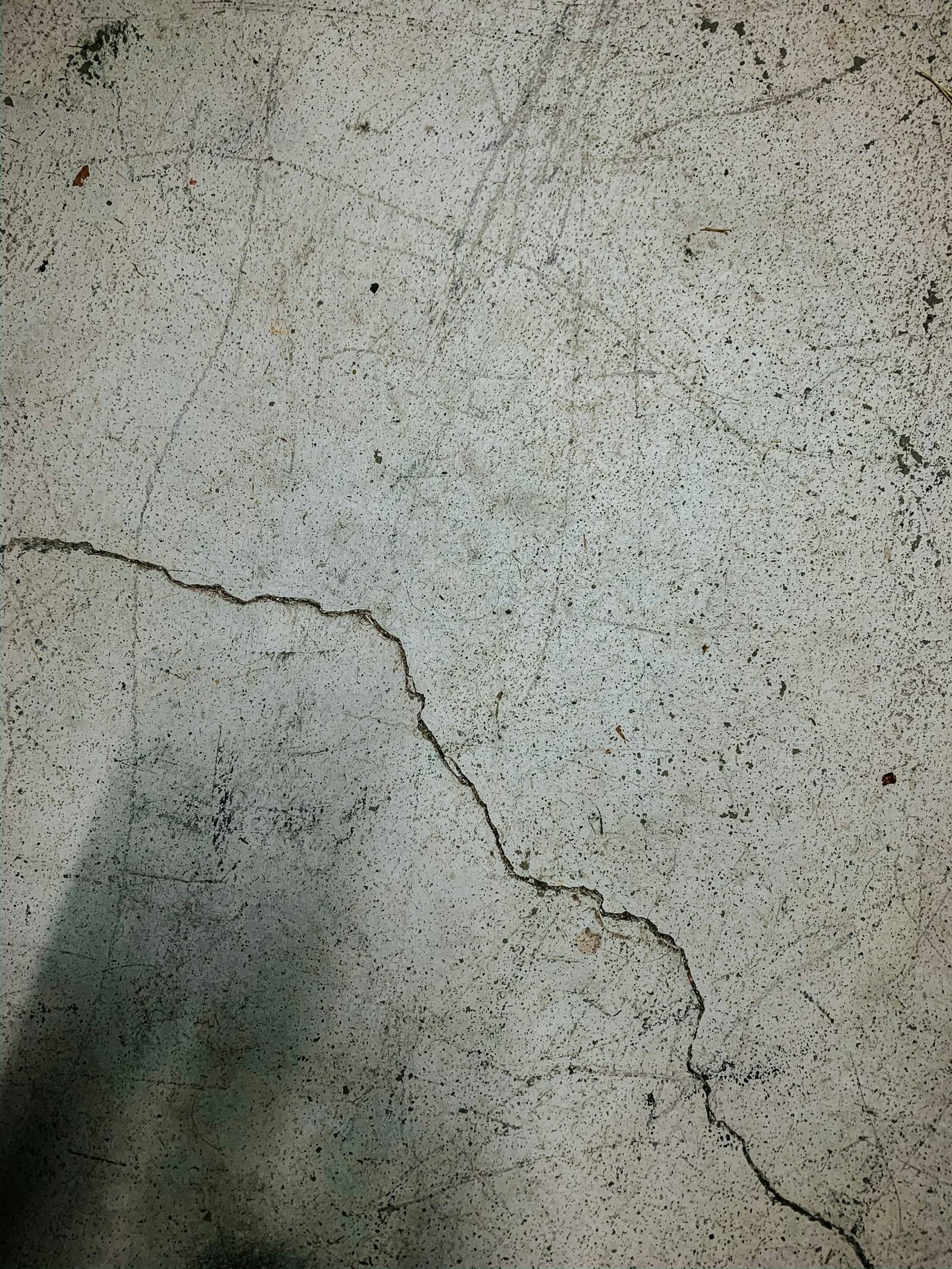
Foundation crack repair means choosing a method by the crack’s cause and the job it must do. Epoxy injection rebonds dormant cracks in poured concrete. Polyurethane injection seals leaking or moving cracks. Hydraulic cement plugs active leaks. Carbon fiber straps and wall anchors stabilize bowing walls. None of them fixes soil, drainage or settlement, so that comes first.
If you haven’t yet worked out what kind of crack you have, start with our guide to foundation cracks, which covers crack types, widths and how to monitor them. This page picks up once you know what you’re looking at, and the foundation crack repair cost guide prices the method you choose.
Why fix the cause before the crack?
A crack repair only lasts if the movement or water that caused the crack has stopped or been dealt with. The American Concrete Institute’s repair bulletin on epoxy injection, ACI RAP-1, puts it plainly: “before any concrete repair is carried out, the cause of the damage must be assessed and corrected… If the crack is subject to subsequent movement, an epoxy repair may not be applicable.”
That doesn’t mean every crack is a crisis. The National Ready Mixed Concrete Association’s CIP 7 notes that “cracking is not necessarily a sign of poor materials or workmanship or a structural problem with the concrete wall.” But it also tells homeowners to “seek professional advice to evaluate and repair active cracks that are widening with time,” and to check and correct the drainage around the house before repairing a leaking crack.
Before you choose a method, answer three questions:
- Is the crack still moving? A dormant crack can be bonded. A crack that is widening needs its cause found and fixed, and may need a flexible material or stabilization instead. Our planned guide on whether to repair or monitor a crack goes deeper.
- Is it leaking? Water changes the choice of material. Some epoxies tolerate damp cracks; polyurethane needs moisture to react.
- Is the wall or slab displaced? If one side has shifted, or the wall is bowing inward, the job is stabilization. Filling the crack alone won’t hold the wall.
Get help promptly
A crack that is widening quickly, a wall that is bulging or leaning, doors that suddenly won’t close, or sagging beams all need a professional assessment soon, not a DIY kit. A structural engineer can assess the cause independently of anyone selling the repair.
Which foundation crack repair method should I use?
Use the method that matches the crack’s job: epoxy to rebond a dormant crack, polyurethane or hydraulic cement to stop water, and straps, anchors or stitching where the concrete has to be held together or held back. The set and cure times below come from specific products’ data sheets. Other products in the same category will differ, so check the sheet for whatever is actually used on your wall.
| Method | What it does | Cracks it suits | Structural or waterproofing | Set / cure (cited product) | DIY? |
|---|---|---|---|---|---|
| Epoxy injection | Fills the crack and bonds the two faces back together | Dormant cracks in poured concrete. ACI: 0.002 in and wider. Simpson Crack-Pac: 1/64 to 1/4 in, dry, damp or wet | Structural; also reduces moisture penetration (RAP-1) | Crack-Pac at 72°F: set to touch 7 hr, dry through 14 hr | Kits exist for narrow, dormant cracks |
| Polyurethane injection | Reacts with water to form a flexible, closed-cell foam that blocks the water path | Leaking cracks and cracks expected to move. RadonSeal: typical small cracks 1/32 to 1/4 in | Waterproofing only. RadonSeal lists 150 psi tensile and 34 psi shear strength | RadonSeal surface seal: injection-ready in about 1 hr. SikaFix port mortar: 1.5 to 2 min | Kits exist |
| Hydraulic water-stop cement | Plugs a crack or hole that is actively leaking | Active leaks only; crack enlarged with square or undercut edges (Quikrete) | Leak plug; not a structural bond, not for flat surfaces or coating a wall | Quikrete: final set 5 min or less; 1,000 psi at 2 hr | Yes, as an emergency fix |
| Routing and sealing / sealant | Widens the crack at the surface and fills it with a sealant | Narrow surface cracks; listed by NRMCA among basement-wall repair options | Sealing, not structural | Varies by sealant; no product sheet reviewed here | Yes |
| Mortar patch (block walls) | Refills cracked mortar joints or a widened crack | Concrete block walls; This Old House pairs expanding foam with mortar | Cosmetic and minor sealing | This Old House: mortar sets in about 15 min; wait two weeks before painting | Yes, for small dormant cracks |
| Carbon fiber straps or staples | Bonds reinforcement to the wall to resist further inward movement | Bowing or horizontally cracked walls with limited movement, as specified by an engineer | Structural stabilization; does not seal water | Varies by system; no product sheet reviewed here | No |
| Wall anchors | Ties the wall back to anchors set in the soil away from the house | Walls bowing further than straps are suited to, as specified by an engineer | Structural stabilization; does not seal water | Not a cured product | No |
| Crack stitching | Anchors U-shaped metal "stitching dogs" in holes drilled on both sides of the crack, set in nonshrink grout or epoxy (USACE EM 1110-2-2002) | Major cracks where tensile strength must be reestablished across the crack (USACE) | Structural; does not seal water. USACE says a leaking crack should be made watertight before stitching | Depends on the grout or epoxy used | No |
About this table
Width ranges and times are the manufacturers’ published figures for the named product, not a rule for the whole category. Crack-Pac is rated for base-material temperatures of 60°F to 90°F. If the foundation has settled or heaved, the fix is support underneath, such as piers or underpinning, covered in our foundation repair methods guide.
What each method costs, and whether it deals with movement
Injection and sealing cost hundreds of dollars per crack; stabilizing a wall costs thousands; and none of these methods fixes the soil or drainage that moved the wall. The prices below are the published, dated figures verified for our foundation crack repair cost guide, which has the full ranges and a worked example.
| Method | Published professional cost (USD) | Published DIY cost (USD) | Does it deal with movement? | How long it lasts |
|---|---|---|---|---|
| Epoxy injection | $250–$800 for crack repair by epoxy or polyurethane injection (HomeAdvisor, June 2026). About $58 per linear foot, $800 minimum (Acculevel, prices undated) | About $100–$400 for an epoxy injection kit, cracks under 1/4 in (NerdWallet, Feb 2026) | No. It bonds a dormant crack; if the crack keeps moving, "an epoxy repair may not be applicable" (RAP-1) | Not published |
| Polyurethane injection | $250–$800 (HomeAdvisor, June 2026). About $550–$600 for one crack, Chicago area (US Waterproofing, Jan 2026) | $157.99 for a 10-ft RadonSeal urethane kit (Walmart.com, Oct 18, 2026); $268 for a 20-ft Emecole kit (Big Rock Supply, Oct 18, 2026) | Flexes with the crack: RadonSeal recommends it where more than 20% movement is expected. It doesn't stop the wall moving | Not published |
| Hydraulic water-stop cement | Not priced separately; This Old House lists $250–$800 for crack filling, which it says can use epoxy, polyurethane or hydraulic cement (This Old House, Oct 2026) | Not published in our sources | No. Quikrete limits it to filling active leaks | Not published |
| Routing and sealing | Not published separately | Not published | No; a surface seal | Not published |
| Mortar patch (block walls) | Not published separately | About $20–$40 in supplies for This Old House's foam-and-mortar repair (This Old House, May 2026) | No | Not published |
| Carbon fiber straps | $350–$1,000 per carbon fiber or steel strap; $1,700–$5,000 for a 20-ft wall (Angi, Oct 2026). About $725–$800 per strap (Acculevel, Mar 2026) | Not a DIY method | Holds a bowing wall against further inward movement; US Waterproofing cites it for bowing under 2 in. Doesn't change the soil pressure | Not published |
| Wall anchors | $400–$700 per anchor; $1,600–$2,800 for a 20-ft wall (Angi, Oct 2026) | Not a DIY method | Ties a bowing wall back; US Waterproofing cites anchors or steel beams for 2 to 4 in of bowing | Not published |
| Crack stitching | Not published by any US price source we found | Not published | Can stop a crack propagating, but "will not close a crack," and the added stiffness can make the concrete crack elsewhere (USACE) | Not published |
None of the sources we checked publishes a service life for any of these repairs, which is why the last column says “not published.” What you can get in writing is a warranty, covered below. The stitching guidance comes from a U.S. Army Corps of Engineers manual written for large civil-works concrete such as dams and locks, so treat it as a description of the technique rather than a residential specification; USACE also notes that the stitching dogs “cannot take much compressive force,” so a crack that tends to close as well as open needs them stiffened.
Epoxy or polyurethane injection: which is better?
Epoxy is the choice when the crack is dormant and the concrete needs to act as one piece again; polyurethane is the choice when the crack leaks or is expected to move. ACI RAP-1 frames it this way: “If the crack does not compromise the structural integrity of the structure, injection with polyurethane grouts or other nonstructural materials may be a more suitable choice.” Our planned epoxy vs polyurethane comparison covers the trade-offs in more depth.
When epoxy fits
According to RAP-1, epoxy injection “can restore structural integrity and reduce moisture penetration through concrete cracks 0.002 in. (0.05 mm) in width and greater.” For cracks 0.010 inch or narrower, the bulletin calls for a low-viscosity epoxy of 500 cps or less. Epoxy is rigid, so it suits cracks that have stopped moving. RAP-1 also warns that “cracks caused by corroding reinforcing steel should not be repaired by epoxy injection because continuing corrosion will cause new cracks to appear.” More detail is in our planned epoxy injection guide.
When polyurethane fits
RadonSeal’s data sheet describes its product as a hydrophobic liquid that reacts with water and forms “a closed-cell foam barrier,” and says polyurethane “is ideal when greater than 20% movement (expansion and contraction) of the substrate is expected, or when epoxy injection is not suitable.” It typically foams to 6 to 10 times its volume in small cracks. Its cured strength (150 psi tensile, 34 psi shear) shows why it is a water seal, not a structural bond. Sika notes that “moisture must be present to bond the mortar and activate the grout.” See our planned polyurethane injection guide.
Where the advice conflicts
Much of what you’ll read about this choice comes from companies that sell one product or both. US Waterproofing, a contractor that uses urethane, says epoxy “wouldn’t adhere to wet concrete.” Simpson rates Crack-Pac for “dry, damp or wet conditions,” and RAP-1 says that if a crack “is damp and cannot be dried out, an epoxy tolerant to moisture should be considered.” The honest answer is that it depends on the product. WATERPROOF! Magazine’s explainer, written by the manager of a company that sells both, says wet or leaking cracks “often will have better results being injected with polyurethane foam.” Ask whoever recommends a material for its data sheet and check that the sheet covers your crack’s condition.
How does the repair change for poured, block and slab foundations?
The wall’s construction narrows the options before the crack itself does.
Poured concrete walls
Injection is the usual method for cracks in solid poured walls. NRMCA lists “epoxy injection, dry-packing, or routing and sealing” as the ways to repair and stabilize basement-wall cracks. For context, NRMCA says a typical builder warranty covers cracks that “leak, have measurable vertical displacement, or if the crack width exceeds 1/8-in. (3 mm).”
Concrete block walls
Block walls have hollow cores, so injected material can run into the voids instead of filling the crack. This Old House’s block-wall method widens the crack to about 1/4 to 3/8 inch, fills it with expanding foam, then finishes it with mortar mixed with an acrylic bonding agent. It recommends professional help for cracks wider than 1/4 inch. Stair-step cracks along the mortar joints usually raise a stabilization question rather than a patching one; see our planned guide to stair-step foundation cracks.
Slab-on-grade cracks
A slab crack with no displacement is usually a sealing job, for appearance or to keep moisture out. If the slab has settled, heaved or shows displacement across the crack, the question is support, not sealing; our slab foundation repair guide covers that.
What if the cracked wall is bowing?
A wall that is bowing inward needs to be held in place, and filling its cracks won’t do that. Horizontal cracks and inward bowing often come from soil pressure on the outside of the wall, and the repair is reinforcement or anchoring. Our planned guides to horizontal foundation cracks and bowing foundation walls cover diagnosis.
Contractors often match the system to how far the wall has moved. US Waterproofing, for example, cites:
- Carbon fiber for bowing of “less than 2 inches.” See our planned carbon fiber wall repair guide.
- Steel beams or wall anchors for “2 to 4 inches.” See our planned wall anchors guide.
- Rebuilding the wall for “more than 4 inches.”
Contractor rule of thumb
These limits come from a contractor’s published guidance, not from an engineering standard or a product evaluation report we could verify. The right system depends on the wall’s construction, the soil, how much it is still moving, and local code. Have a structural engineer specify it.
Can you repair a foundation crack yourself?
A DIY kit can seal or bond a narrow, dormant crack in a poured wall; it can’t stabilize a wall, fix the cause, or reliably repair a crack that keeps moving. Kits are cheap and widely sold, which makes them easy to use on the wrong crack.
DIY is reasonable when:
- The crack is dormant: you have monitored it and it isn’t widening.
- It falls within the kit’s rated width (Crack-Pac: 1/64 to 1/4 inch, per Simpson).
- It is in a poured concrete wall, with no offset between the two sides and no bowing.
- The concrete is within the product’s temperature range (Crack-Pac: 60°F to 90°F base material).
Call a professional when:
- The crack is horizontal, or the wall is bowing or leaning.
- One side of the crack has shifted past the other.
- The crack reopened after an earlier repair.
- Water is coming through under pressure.
- It is a stair-step crack in a block wall.
- There is rust staining at the crack, which can point to corroding reinforcing steel.
How an injection kit works, in outline. Steps differ by product, so follow the kit’s instructions. RAP-1 says to clean the surface “about 1/2 in. (13 mm) wide on each side of the crack,” preferring a wire brush because “mechanical grinders may fill the cracks with unwanted dust.” Injection ports go along the crack; Sika specifies intervals of 4 to 6 inches. A surface seal goes over the crack and ports and must harden before injection (about an hour for RadonSeal’s paste). Then the resin is injected port by port, left to cure, and the ports are cut off. Prep varies by product: Sika calls for a V-notch on narrow cracks, while Quikrete tells you to “avoid V-shape cuts” for its hydraulic cement.
How long does a crack repair take to cure?
Epoxy takes hours to set and gains most of its strength over days; hydraulic cement sets in minutes; mortar patches need about two weeks before painting. Temperature matters a great deal for epoxy.
| Product | Set / working time | Strength over time | Source |
|---|---|---|---|
| Simpson Crack-Pac epoxy | Pot life 50 min at 72°F, 10 min at 90°F; set to touch 7 hr, dry through 14 hr at 72°F | 24 hr: 4,400 psi at 72°F, 1,900 psi at 60°F. 7 days: 8,900 psi. 28 days: 10,300 psi (72°F) | Simpson Strong-Tie catalog |
| RadonSeal PRO polyurethane kit | Surface seal injection-ready in about 1 hr (varies with temperature) | Cured foam: 275% elongation, 150 psi tensile, 34 psi shear | RadonSeal data sheet |
| SikaFix Kit | Port mortar dries in 1.5 to 2 min | Not stated in the reviewed sheet | Sika data sheet |
| Quikrete Hydraulic Water-Stop Cement | Place within 2 to 3 min of mixing; final set 5 min or less | 1,000 psi at 2 hr; 2,500 psi at 24 hr; 5,500 psi at 28 days | Quikrete data sheet |
| Mortar patch (This Old House method) | Foam cures in about 10 min; mortar sets in about 15 min | Cure two weeks before painting | This Old House |
At 60°F, Crack-Pac’s 24-hour strength is less than half its strength at 72°F, which is one reason cold basements are a problem for epoxy work. After any repair, keep checking the crack and the wall around it through wet and dry seasons. A new crack running alongside a repaired one usually means the wall is still moving. For larger jobs, the industry has a published method for verifying epoxy injection in the field, ICRI 210.1R-2016, which a contractor or engineer can reference if the quality of the work is in question.
Why do foundation crack repairs fail?
Most failed crack repairs trace back to the wrong material for the crack’s condition, or to a cause that was never fixed.
- The crack kept moving. Rigid epoxy can’t follow ongoing settlement or soil pressure, so the wall cracks again beside the repair. RAP-1 says epoxy “may not be applicable” if movement continues.
- The crack was wet and the epoxy wasn’t made for it. RAP-1 calls for a moisture-tolerant epoxy if a damp crack “cannot be dried out.”
- The concrete was too cold. Crack-Pac’s rated base-material range starts at 60°F, and WATERPROOF! Magazine says “injecting concrete colder than freezing is not recommended.”
- The reinforcing steel is corroding. Per RAP-1, continuing corrosion “will cause new cracks to appear,” so epoxy isn’t the fix.
- The drainage was never fixed. NRMCA says drainage “should be checked and corrected” before a leaking crack is repaired.
- A leak plug was treated as a repair. Hydraulic cement is, in Quikrete’s words, “only for use to fill active leaks in cracks or holes.” It doesn’t bond the crack or flex with movement.
What does a crack repair warranty cover?
A crack repair warranty usually covers the specific crack that was repaired, most often against renewed leaking, and not new cracks or the wall’s structural movement. Terms vary widely by contractor, so read the written warranty, not the advertising.
- The repaired crack, not the wall. RenoQuotes, a Canadian renovation marketplace, says “most injection warranties apply only to the crack or area specifically identified in the contract,” and describes the typical promise as correcting “water infiltration that reoccurs at the specific location where the injection was performed” (July 2026). US Waterproofing’s warranty page says that if “another crack develops elsewhere in your basement, we’ll be happy to fix that one too – just not under warranty” (February 2026).
- Length varies from years to a lifetime. Published examples from contractors: Acculevel offers “a 5 year warranty on crack repairs”; Drycrete Waterproofing, in Rhode Island and Massachusetts, advertises a “10-year transferable warranty”; and US Waterproofing says crack injection is “warranted for the life of the homeowner” and transferable to the next owner.
- Common exclusions. RenoQuotes lists foundation drainage system failure, pyrite or unstable soil, an untreated adjacent crack, and no exterior waterproofing as common exclusions, and notes that some contractors give shorter warranties when a crack is injected only from the interior. US Waterproofing limits its exterior-work warranty because that work “is subject to environmental factors beyond our control.” These exclusions are why a warranty on the crack is not a warranty on the cause.
- Transfer and claims. RenoQuotes says a transfer may involve written notice, a transfer form, proof of purchase or a fee, and that a warranty is “valuable only if the company that issued it remains in business and is able to honour it.” Keep the contract, and photograph and date any renewed leak before you call.
- A builder’s warranty is different. On a newer house, NRMCA says a typical builder warranty covers basement cracks that “leak, have measurable vertical displacement, or if the crack width exceeds 1/8-in. (3 mm)” (NRMCA).
What a contractor’s quote should include
A good crack repair quote names the cause, the method and the exact product, and says what the warranty covers if the crack leaks or reopens. Ask for these in writing:
- The cause the contractor believes produced the crack, and what (if anything) is being done about it: drainage, grading, stabilization.
- The method and product, with its data sheet, so you can check its rated width, moisture and temperature limits.
- The scope: crack length, number of ports, and whether the work is from the inside or the outside. NRMCA notes that “positive side waterproofing (exterior) is generally better than negative side (inside)” for keeping water out.
- The warranty: whether it covers renewed leaks, a reopened crack or only the material, and whether it transfers to a buyer.
- An engineer’s letter if the crack is structural or the wall is moving. Our planned guide on when you need a structural engineer explains when that’s worth the fee.
For a rough cost orientation: HomeAdvisor puts professional crack repair by epoxy or polyurethane injection at $250 to $800 (HomeAdvisor, June 2026), while This Old House estimates a DIY block-wall repair at about $20 to $40. Stabilization costs more. Our foundation crack repair cost guide breaks down the prices, and the foundation repair cost calculator gives a planning range. Only written quotes give you a price for your house.
Ready to compare crack repair quotes? Ask each contractor to name the cause, the product and the warranty terms.
Foundation crack repair questions
Is epoxy or polyurethane better for foundation cracks?
They do different jobs. Epoxy bonds the concrete back together, and ACI RAP-1 says it can restore structural integrity in cracks 0.002 inch wide and wider, but it suits dormant cracks. Polyurethane reacts with water to form a flexible foam that stops leaks and tolerates movement. RadonSeal's data sheet recommends it where more than 20% movement is expected. Choose by whether the crack leaks or moves.
Can I repair a foundation crack myself?
Often, if the crack is dormant, narrow, in a poured concrete wall and shows no offset or bowing. Kits such as Simpson Crack-Pac are rated for cracks from 1/64 to 1/4 inch wide. Call a professional for horizontal cracks, bowing walls, stair-step cracks in block, cracks that reopen after a repair, or any crack where one side has shifted past the other.
Does epoxy injection stop foundation settlement?
No. Epoxy fills and bonds the crack, but it does not change what the soil is doing. ACI RAP-1 says the cause of the damage must be assessed and corrected before repair, and that epoxy may not be applicable if the crack will keep moving. Settlement needs drainage fixes, soil work or underpinning, and a rigid repair on a moving wall can crack again beside the repair.
How long does foundation crack repair take to cure?
It depends on the material. Simpson's Crack-Pac epoxy is set to the touch in about 7 hours at 72°F and reaches 4,400 psi in 24 hours at that temperature, but only 1,900 psi in 24 hours at 60°F. Quikrete Hydraulic Water-Stop Cement reaches final set in five minutes or less. This Old House suggests letting a mortar patch cure for two weeks before painting it.
Does hydraulic cement fix foundation cracks?
It plugs leaks; it does not repair the crack structurally. Quikrete's data sheet says its water-stop cement is only for filling active leaks in cracks or holes, sets in five minutes or less, and needs the crack enlarged with square or undercut edges. It is not meant for flat surfaces or coating a wall. Treat it as a leak stopper and decide on a lasting repair separately.
Will a repaired foundation crack come back?
It can, if whatever caused it is still happening. Common reasons are continued settlement or soil movement, a moisture-sensitive epoxy injected into a wet crack, concrete colder than the product's rated range, corroding reinforcing steel, which ACI says should not be epoxy-injected, and drainage that was never fixed. Keep checking the repair through wet and dry seasons after the work is done.
Should foundation cracks be repaired from the inside or outside?
Interior injection avoids digging, but NRMCA notes that positive-side waterproofing, applied from the exterior, is generally better than negative-side work inside for keeping water out of cracks. Persistent leaks or a failed interior repair may justify excavating and treating the outside of the wall. In either case, NRMCA advises checking and correcting the drainage around the house before repairing a leaking crack.
When does a cracked wall need carbon fiber or wall anchors instead of injection?
When the wall is moving inward, not just cracked. Injection fills a crack but does not hold back soil pressure. One contractor, US Waterproofing, cites carbon fiber for bowing under 2 inches, steel beams or wall anchors for 2 to 4 inches, and rebuilding beyond that. Those are contractor rules of thumb, not engineering standards, so have a structural engineer specify the system.
Sources
- ACI Committee E706 — RAP Bulletin 1: Structural Crack Repair by Epoxy Injection (reapproved 2009)
- NRMCA — CIP 7: Cracks in Residential Basement Walls (1979, 2000, 2014)
- Simpson Strong-Tie — Crack-Pac Injection Epoxy catalog pages (C-A-2023, distributor-hosted copy)
- RadonSeal (Novion Inc.) — PRO Polyurethane Repair Kit product data sheet (May 2025)
- Sika Canada — SikaFix Kit product data sheet (Edition 10.2019/v1)
- Quikrete — Hydraulic Water-Stop Cement data sheet No. 1126 (2023)
- WATERPROOF! Magazine — Epoxy or Polyurethane Foam? (Apr 11, 2010)
- US Waterproofing — Foundation Crack Repair Methods: Epoxy vs Urethane Injection (updated Jan 29, 2026)
- US Waterproofing — How to Fix Bowing Basement Walls (updated Mar 3, 2026)
- This Old House — How To Repair a Crack in a Concrete Foundation (updated May 26, 2026)
- HomeAdvisor — How Much Does Foundation Repair Cost? (updated June 20, 2026)
- ICRI — 210.1R-2016 Guideline for Verifying Field Performance of Epoxy Injection of Concrete Cracks (store listing)
- U.S. Army Corps of Engineers — EM 1110-2-2002, Evaluation and Repair of Concrete Structures, §6-32 Stitching (June 30, 1995; PDHonline-hosted copy)
- This Old House — Foundation Repair Cost (updated October 8, 2026)
- Acculevel — Crack Repair with Epoxy (published July 23, 2020; prices undated)
- Acculevel — Carbon Fiber Straps (modified March 25, 2026)
- US Waterproofing — Foundation Repair Cost (updated January 29, 2026)
- Angi — Cost to Support a Bowing Basement Wall (updated October 1, 2026)
- NerdWallet — Foundation Repair Cost (February 25, 2026)
- Walmart.com — RadonSeal Concrete Foundation Crack DIY Repair Kit, 10 ft (price checked October 18, 2026)
- Big Rock Supply — Emecole 20 ft. Foundation Crack Repair Kit, Polyurethane Foam (price checked October 18, 2026)
- US Waterproofing — U.S. Waterproofing & Foundation Repair Warranty: 4 Things You Should Know (updated February 26, 2026)
- Drycrete Waterproofing — Foundation Crack Repair (modified September 18, 2026)
- RenoQuotes (Canada) — Basement Crack Injection Warranties in Canada: What You Need to Know (updated July 17, 2026)