Foundation types
Mobile Home Leveling: Signs, Process, Cost and the HUD Standard
Mobile home leveling resets the piers under a manufactured home's steel frame so the floors sit flat and the doors close. It is a different job from foundation repair on a site-built house, and a federal standard says what level means.
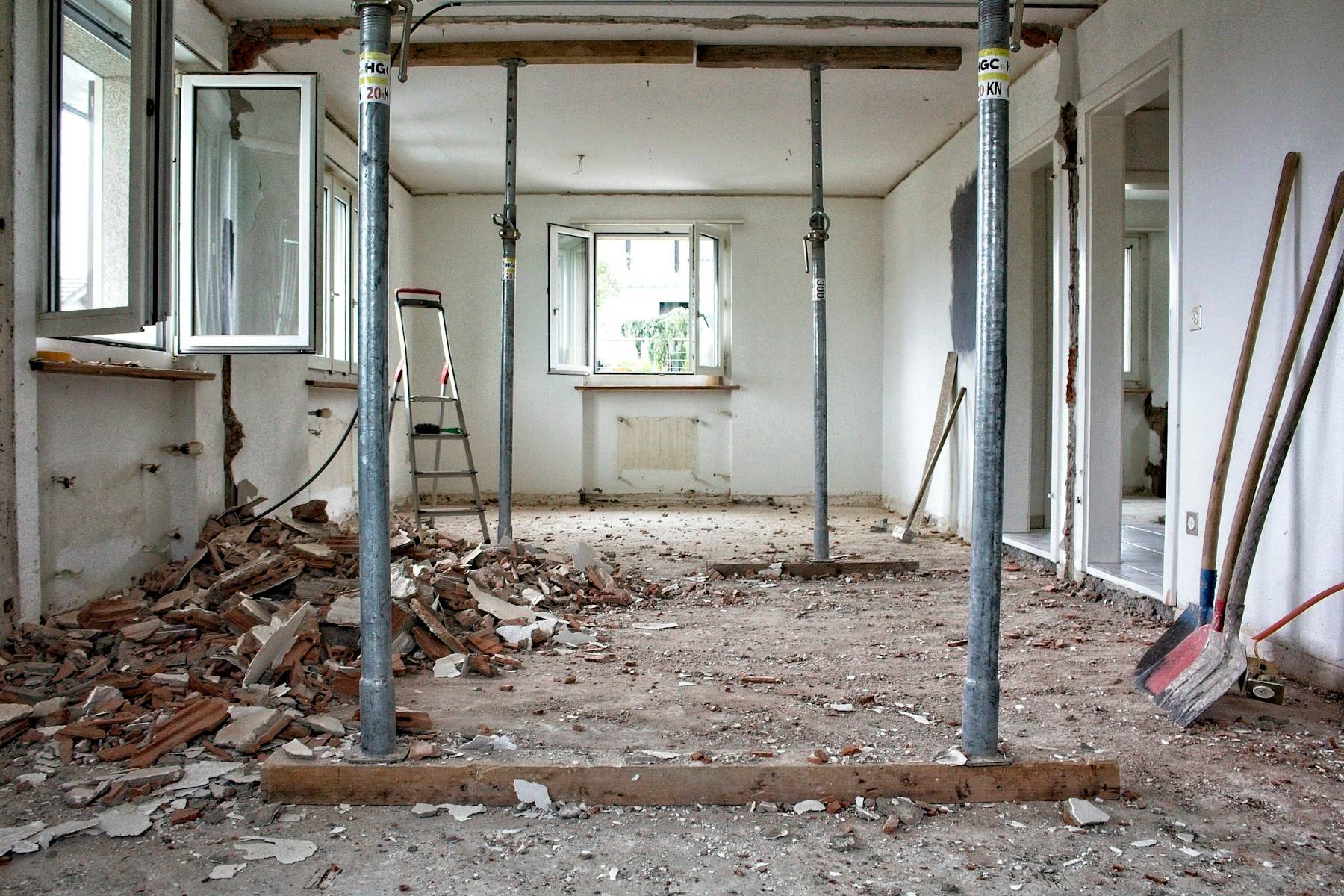
Mobile home leveling (also called re-leveling) means jacking each section of a manufactured home’s steel frame and adjusting the shims, blocks and pads on its piers until the home sits within HUD’s standard: no more than 1/4 inch of difference between adjacent piers, with exterior doors and windows that open without binding. Angi puts the job at $450–$600 for a single-wide and $750–$900 for a double-wide in 2026, and it typically takes three to six hours.
Manufactured homes sit on a different kind of support from site-built houses, follow a federal installation standard, and are usually serviced by specialist leveling crews rather than foundation repair companies. This page explains how that support works, how to tell when a home needs leveling, what the job involves and costs, and when the problem is bigger than leveling. For site-built houses, see the house leveling guide.
Mobile home leveling at a glance
1/4 in
Maximum difference between adjacent pier supports for a home to count as adequately leveled
$450–$600
Single-wide leveling, typical range
$750–$900
Double-wide leveling, typical range
3–6 hours
Typical time for a professional re-level
How a Mobile Home Is Supported
A manufactured home is built on a steel chassis: two or more long I-beam rails under each section. Instead of a continuous footing, the rails rest on a series of piers, and each pier sits on its own footing pad on the ground. Leveling is the work of resetting those piers. The federal Model Manufactured Home Installation Standards, 24 CFR Part 3285, set the rules for how they’re built.
| Part | What it does | What the standard says | Source |
|---|---|---|---|
| Frame piers | Columns, usually concrete blocks, under the main I-beam rails | No more than 24 inches from each end and no more than 120 inches center to center under the main rails | 24 CFR 3285.310(c) |
| Pier height | Taller piers need stronger construction | Under 36 inches: single stacked blocks. 36 to 67 inches, and corner piers over three blocks: double, interlocked blocks. Over 67 inches: designed by a registered engineer or architect | 24 CFR 3285.306 |
| Mate-line and column piers | Support the joint where the sections of a multi-section home meet | Must follow the standard's figures unless designed by a registered engineer or architect | 24 CFR 3285.310(b) |
| Footings (pads) | Spread each pier's load on the soil | Every pier needs a footing on undisturbed soil or fill compacted to 90% of maximum density. Precast concrete, poured concrete, pressure-treated wood or listed ABS pads are allowed | 24 CFR 3285.312(a) |
| Frost protection | Stops freezing soil from lifting piers | In freezing climates, footings must be designed to prevent frost heave, for example by placing them below the frost line | 24 CFR 3285.312(b) |
| Shims and wedges | Fill the gap between the top of the pier and the rail | Adjusted during leveling to bring each pier to height | Angi, Aug 2026 |
State rules may apply too
Signs Your Mobile Home Needs Leveling
Most homes go out of level slowly as pads sink into soft ground, shims compress or rot, or freezing soil moves piers. Angi and This Old House list the same warning signs (Angi, Aug 2026; This Old House, Jun 2026):
- Doors and windows that stick, won’t latch, or swing open or shut on their own.
- Unusual cracks in walls or ceilings, especially at the corners of doors and windows.
- Skirting or siding that buckles or looks squeezed.
- Creaking sounds or floors that feel uneven.
- A tilted exterior you can see from the street.
The doors-and-windows test lines up with the federal definition: a home isn’t considered adequately leveled if its exterior doors and windows bind (24 CFR 3285.6).
How Mobile Home Leveling Works
A professional re-level follows roughly the same steps on every home. The details depend on the home’s size and how far out of level it is.
- Open the skirting. The crew removes enough skirting panels to reach every pier.
- Inspect the supports. Each pier, footing pad, cap block, shim pack and tie-down is checked for cracking, rot, sinking or looseness.
- Map the frame. A water level or laser is used to find the high and low points along each rail.
- Jack in small steps. Hydraulic jacks set on solid bases lift the frame near a low pier a little at a time, never one area far ahead of the rest.
- Reset the piers. Shims and wedges are added or replaced, and damaged blocks or pads are swapped out, until the frame sits at the target height on each pier.
- Match the sections. On multi-section homes, the halves are brought level with each other along the mate line.
- Check doors and windows. Exterior doors and windows should open and close without binding, which is part of the HUD test.
- Retighten and close up. Any tie-down straps loosened for the work are re-tensioned, and the skirting goes back on.
Safety
How Much Does Mobile Home Leveling Cost?
Leveling is one of the cheaper jobs under a home. It’s priced mostly by the size of the home, because a bigger home has more piers to check and adjust.
| Home size | Angi (updated Aug 3, 2026) | This Old House (updated June 5, 2026) |
|---|---|---|
| Single-wide | $450–$600 | $450–$600 (average $525) |
| Double-wide | $750–$900 | $750–$900 (average $825) |
| Triple-wide or extra-wide | $1,000+ | $1,000+ |
| Overall average | — | $450–$900 |
Sources: Angi; This Old House, which uses Angi cost data. The two are not independent estimates.
Both sources say the price climbs when the home is far out of level or its jacks, blocks or pads are in poor condition, because those have to be reset or replaced. They also list access and local labor rates as cost factors. If the problem is the ground rather than the piers, budget for that separately: Angi cites foundation repairs averaging about $5,000, and This Old House about $4,500 (Angi; This Old House). Repair budgets for site-built foundations are on the foundation repair cost guide.
How Often Should a Mobile Home Be Re-Leveled?
Angi says most mobile home manufacturers recommend re-leveling every three to five years (Angi, Aug 2026). Your home’s installation manual is the best source for your model. A home on poorly drained or expansive soil, or in a cold climate, may need it sooner. Check the warning signs above every year, and look again after a wet season, a hard freeze or any plumbing leak under the home, since moisture can soften the soil under the pads.
Can You Level a Mobile Home Yourself?
You can make small adjustments, but a full re-level is hard, physical and dangerous work. This Old House says DIY leveling means crawling under the home with a water level and hydraulic bottle jacks, and that the tools alone can cost up to $500 (This Old House, Jun 2026). Angi suggests limiting DIY to basic maintenance:
- Tightening or adjusting a few loose wedges.
- Checking for low points with a water level.
- Looking for signs of settling, such as uneven floors or misaligned doors (Angi, Aug 2026).
Hire a leveling crew if the home is more than slightly out of level, a pier or pad is cracked or sinking, the home is a multi-section with a gap at the mate line, or anything has to be lifted more than a shim’s thickness.
When It’s More Than a Leveling Job
Re-leveling only fixes the result. It doesn’t fix the cause. If a home keeps going out of level within a year or two, one of these is usually behind it:
- Water under the home. This Old House notes that moisture can make the soil under a home soft and unstable (This Old House, Jun 2026). Fix leaks and drainage first.
- Undersized or failed footings. Pads that sink, crack or rot need replacing with footings that meet the standard (24 CFR 3285.312).
- Frost heave. In freezing climates, footings above the frost line can lift every winter (24 CFR 3285.312(b)).
- Tall or damaged piers. Piers over 67 inches must be designed by an engineer or architect (24 CFR 3285.306).
- A permanent foundation that is settling. A manufactured home set on a perimeter wall or slab can have the same settlement problems as a site-built house. See signs of foundation problems and the foundation repair methods guide.
What to Ask a Mobile Home Leveling Company
- Do you level manufactured homes regularly? It’s a specialist job, separate from site-built foundation repair.
- Is the price per home or per pier, and what’s included if a block, pad or shim pack has to be replaced?
- Will you check and re-tension the tie-downs?
- How will you level the sections to each other on a multi-section home?
- Do I need a permit or a licensed installer for this work in my state?
- Do you offer a warranty on the leveling, and for how long?
Home on a permanent foundation that's cracking or settling? Compare foundation contractors near you.
Mobile home leveling questions
How much does it cost to level a mobile home?
Angi puts mobile home leveling at $450 to $600 for a single-wide, $750 to $900 for a double-wide and $1,000 or more for a triple-wide (updated August 2026). This Old House, using Angi data, gives a $450 to $900 overall average (June 2026). Replacing failed piers, pads or blocks, or repairing the ground under the home, costs extra.
How long does it take to level a mobile home?
Usually three to six hours, according to both Angi and This Old House. A large home, a home that is far out of level, or one with damaged piers can take longer, and a DIY job usually takes much longer than a professional crew.
How often should a mobile home be leveled?
Angi says most mobile home manufacturers recommend re-leveling every three to five years. Check sooner if doors start sticking, new cracks appear, or the skirting buckles, and after heavy rain, a freeze-thaw season or any plumbing leak under the home. Your home's installation manual is the best guide for your model.
How level does a mobile home have to be?
Under HUD's installation standard, 24 CFR 3285.6, a manufactured home is adequately leveled when there is no more than a 1/4-inch difference between adjacent pier supports and the exterior doors and windows don't bind and can be properly operated.
Can I level my own mobile home?
Small adjustments are possible, but the full job is heavy and risky. This Old House says DIY leveling is physically intensive and the tools can cost up to $500, and it means crawling under the home with a water level and hydraulic bottle jacks. Angi suggests limiting DIY to tasks like tightening loose wedges, checking for low points with a water level and inspecting for signs of settling. Never work under a home supported only by a jack.
How do you level a double-wide mobile home?
The same way as a single-wide, but with more piers and the marriage line to match. HUD's standard covers mate-line and column piers where the two halves join as well as frame piers under the main rails. The crew levels both sections to each other as well as along their length, and Angi notes that bigger homes have more blocks and piers to check and readjust, which is why double-wides cost more.
Is mobile home leveling the same as foundation repair?
No. Leveling adjusts the piers, pads and shims under the steel frame, usually in a few hours. If the ground under the piers is washing out, freezing, or too soft to hold a pad, re-leveling won't last, and the soil, drainage or footings need fixing first. A home on a permanent foundation that is cracking or settling is closer to a foundation repair job.
Sources
- HUD Model Manufactured Home Installation Standards — 24 CFR 3285.6, Final leveling of manufactured home, via Cornell LII (current CFR)
- HUD Model Manufactured Home Installation Standards — 24 CFR 3285.306, Design procedures for concrete block piers, via Cornell LII (current CFR)
- HUD Model Manufactured Home Installation Standards — 24 CFR 3285.310, Pier location and spacing, via Cornell LII (current CFR)
- HUD Model Manufactured Home Installation Standards — 24 CFR 3285.312, Footings, via Cornell LII (current CFR)
- HUD Manufactured Home Installation Program — 24 CFR 3286.1, Purpose, via Cornell LII (current CFR)
- Angi — How Much Does Mobile Home Leveling Cost? (Alison Kasch; updated August 3, 2026)
- This Old House — How Much Does Mobile Home Leveling Cost? (Stephanie Minasian-Koncewicz; updated June 5, 2026; Angi cost data)